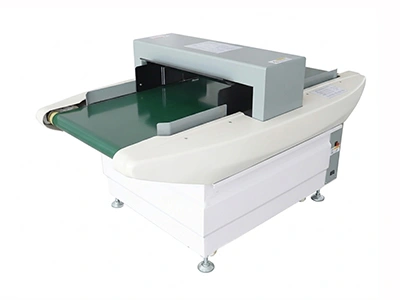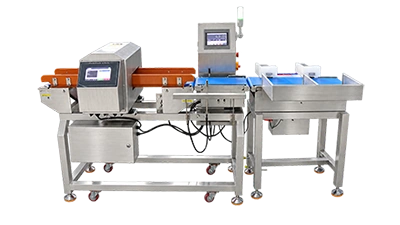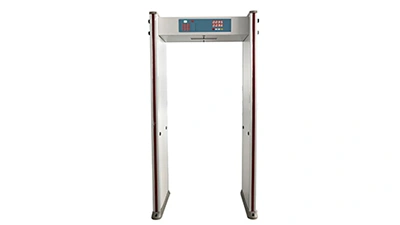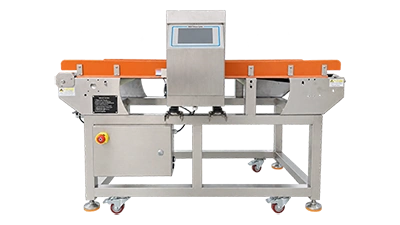
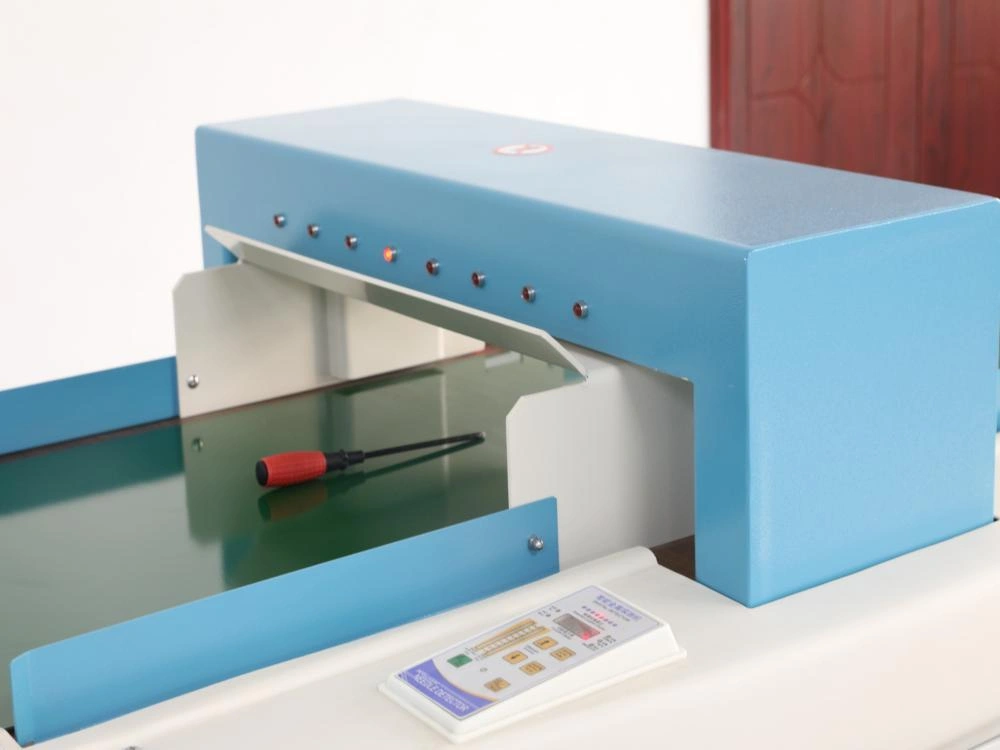
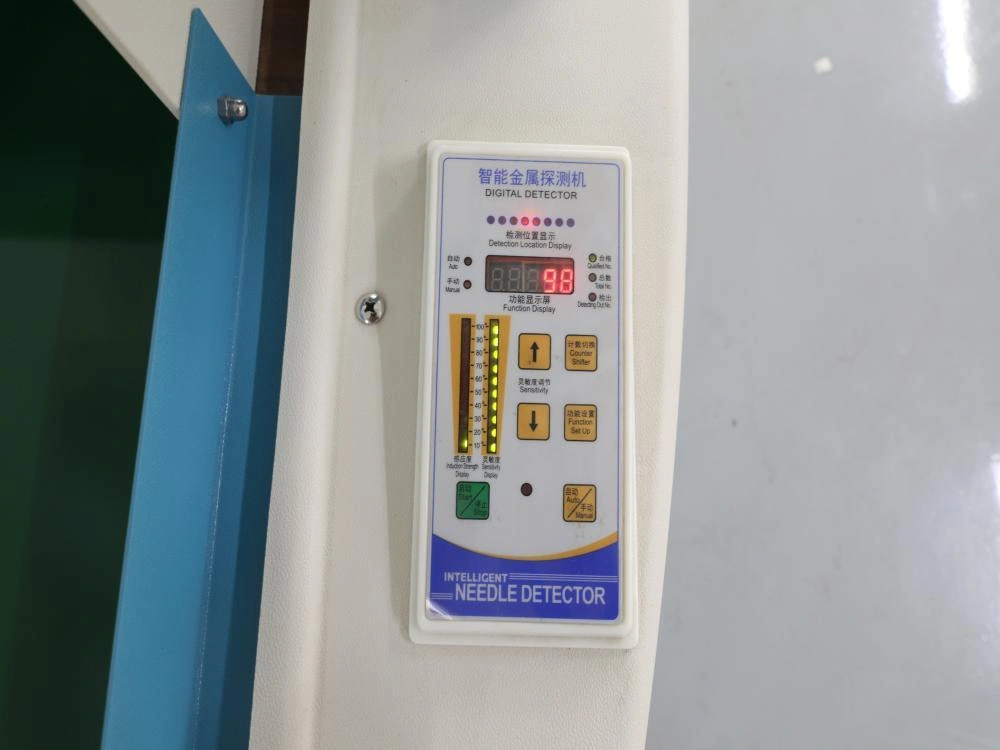
Conveyor Needle Detector
Metal can remain in items after cutting, stitching, and processing, such as broken needles, iron needle pieces, and iron filings, due to equipment damage, operator error, or production process issues. Contaminants that go undetected and enter the market endanger consumers while also harming brand reputation and customer approval.
- Detection Sensitivity: Iron (Fe) 0.8–1.0 mm;
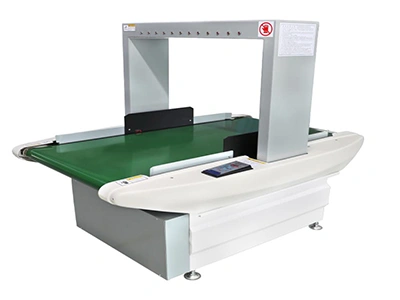
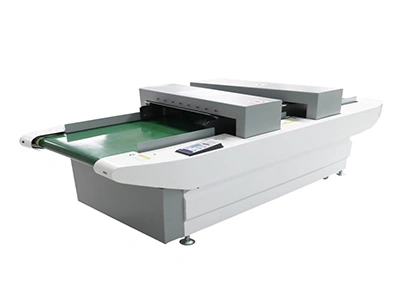
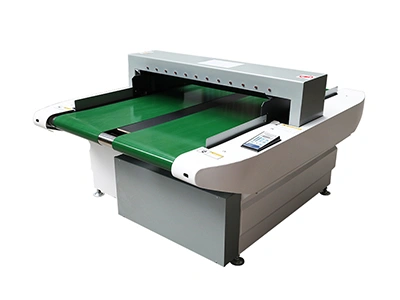
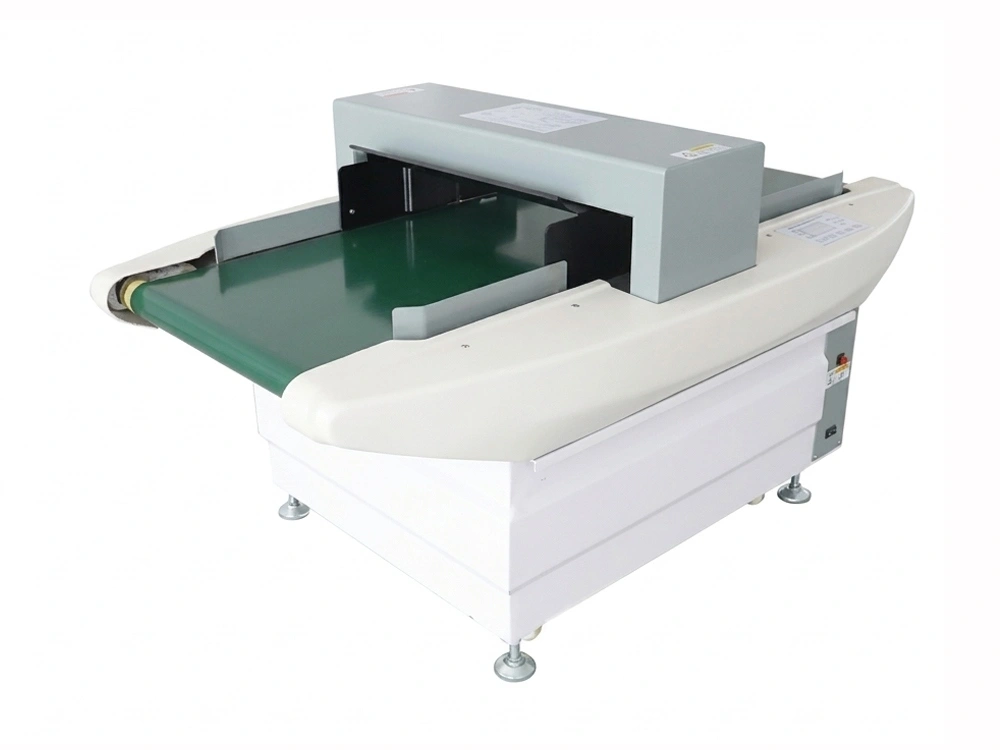
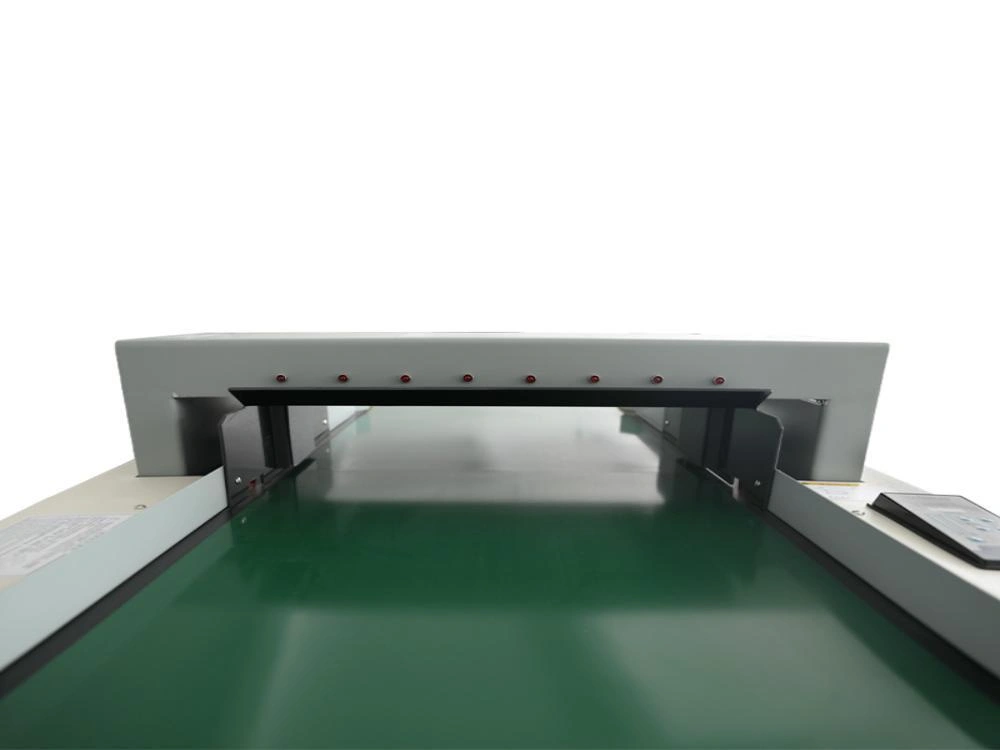
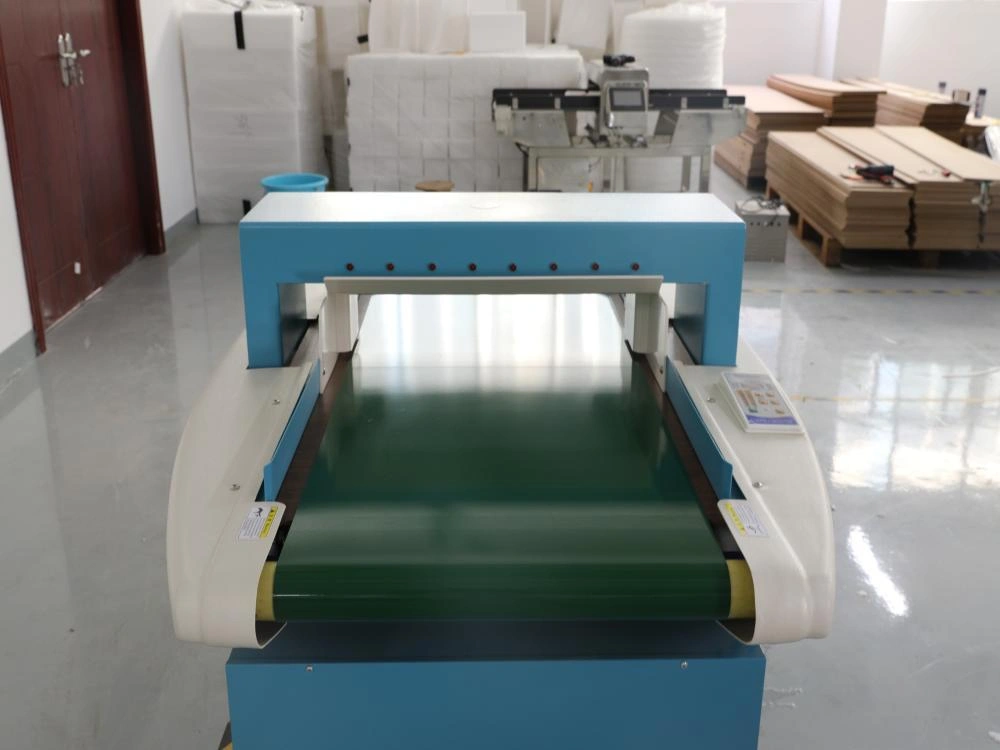
The conveyor needle detector employs magnetic induction detecting technology. A conveyor belt moves products continually past the detecting zone, making inspection automatic. It meets the metal contamination detection needs of most garment and textile production lines.
The conveyor needle detector operates on the basis of magnetic induction. The magnetic field changes as a product travels through the detection zone due to the internal induction coils. When a metal pollutant is identified, the device quickly sounds an alarm, prompting the operator to take action.
| Item | Conveyor Needle Detector |
| Detection principle | Magnetic induction |
| Sensitivity adjustment | 1–10 levels |
| Detectable metals | Iron (Fe) |
| Detection sensitivity | Fe 0.8–1.0 mm |
| Conveyor speed | Fixed 20 m/min; adjustable 15–30 m/min (custom speeds on request) |
| Detection width × height | 600 × 100 mm (custom sizes available) |
| Machine dimensions | 1,650 × 1,160 × 890 mm (customizable) |
| Power | Single-phase 220 VAC or 110 VAC / 150 W |
- Different detection widths
- Different detection heights
- Conveyor belt length
- Conveyor speed
- Machine dimensions